Understanding Two Very Different Tradition
Few subjects in the history of witchcraft create as much fascination as white magic and black magic.
The two expressions appear constantly in books, folklore, films and modern discussions of witchcraft.
Thank you for reading this post, don't forget to subscribe!But their meanings are not always as simple as popular culture suggests.
To understand them properly, it is useful to look beyond the stereotypes and examine what these terms have traditionally represented.
What Is White Magic?
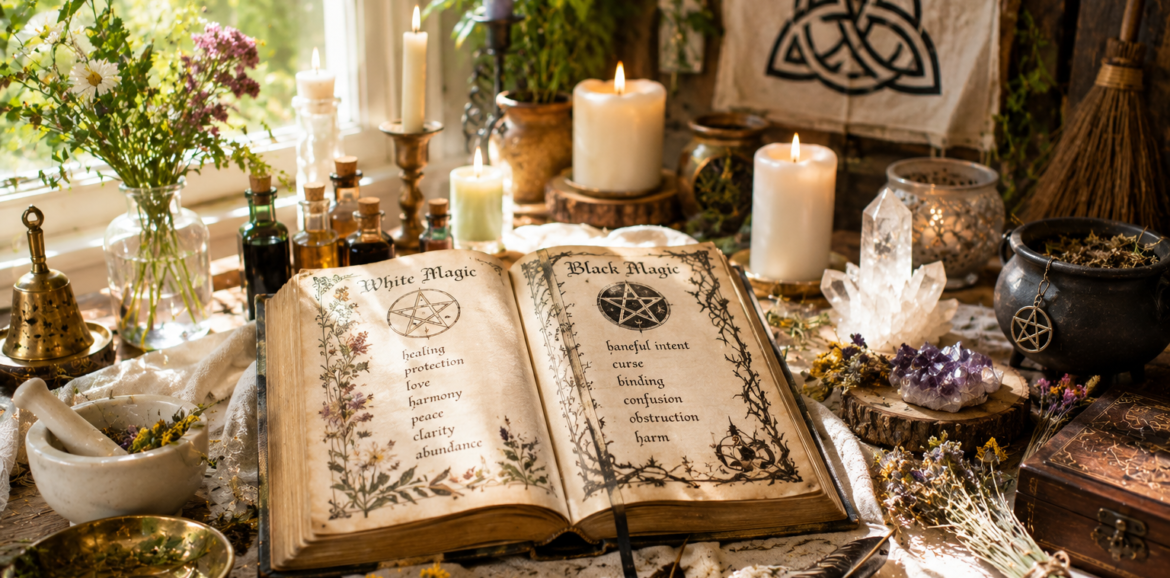
White magic is commonly associated with benevolent or constructive magical intentions.
Depending upon the tradition, this may include ideas of protection, healing, prosperity, love, spiritual wellbeing or removing negativity.
Modern practitioners may interpret white magic in very different ways.
Some consider it a spiritual practice.
Others regard it as symbolic ritual.
For many people who describe themselves as practitioners of white witchcraft, the intention behind the work is particularly important.
White Magic and Love
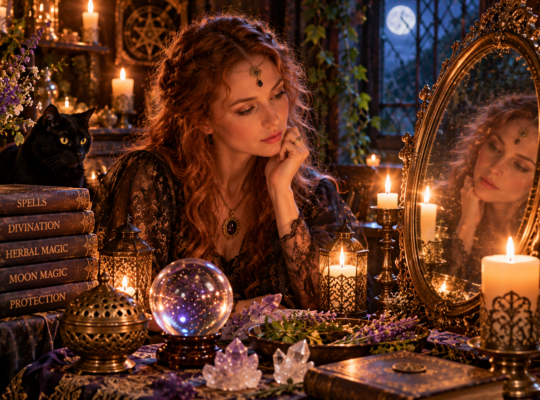
Love magic has a long history within folklore and magical traditions.
A person may seek a ritual associated with attracting love, encouraging confidence or opening themselves to a new relationship.
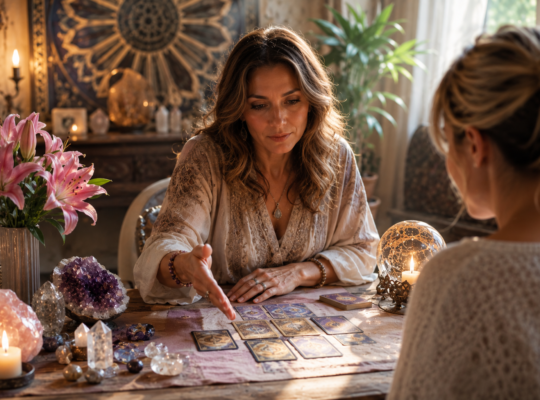
At David Charles Psychic, white magical spell work can be customised according to the circumstances of the person requesting it.
We always make our best efforts, but we do not guarantee the result of a spell.
No magical practitioner should pretend that another person’s feelings or choices can be guaranteed.
What Is Black Magic?
The expression black magic has traditionally been used to describe magic regarded as harmful, malevolent or intended to manipulate others.
However, its meaning has changed across different historical periods and cultures.
A practice condemned as black magic in one society might have been regarded very differently elsewhere.
The term therefore needs to be treated with historical care.
Why Has Black Magic Become So Famous?
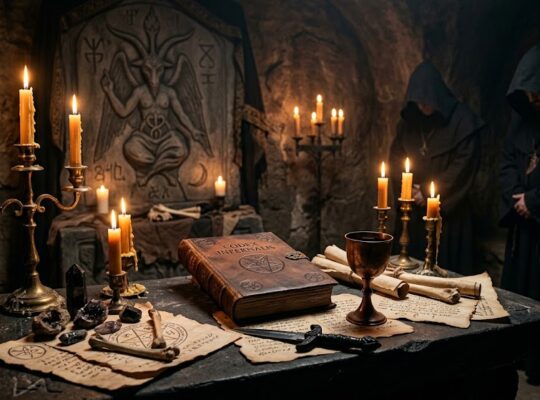
Books, films and television have created an extremely dramatic image of black magic.
Dark robes, mysterious symbols, curses, forbidden books and sinister rituals have become familiar features of popular culture.
These images can be entertaining, but they do not necessarily represent the complexity of historical magical traditions.
In many historical accounts, the boundary between religion, medicine, folklore, superstition and magic was considerably less clear than it is today.
The Importance of Intention
One of the most interesting questions surrounding magical traditions is the question of intention.
Two rituals might appear similar on the surface while being understood completely differently according to their purpose.
This is one reason the distinction between white and black magic has never been entirely straightforward.
Is magic defined by the object being used?
By the ritual?
Or by what the practitioner intends to achieve?
Different traditions have provided different answers.
White Witchcraft Today
Modern white witchcraft can encompass a wide variety of practices.
Some practitioners concentrate on nature and seasonal traditions.
Others work with candles, symbolism, meditation, herbs or spells.
Some practise alone, while others belong to a coven or another spiritual community.
There is no single modern definition that covers everyone.
Why Responsible Practice Matters
Magical traditions can be fascinating without requiring people to cause harm.
Historical study, folklore, symbolism and personal spirituality provide many ways to explore witchcraft.
At David Charles Psychic, our approach to white magic is intended to remain positive and respectful.
We believe people should be treated with care, and we do not promise impossible outcomes.
Black Magic in Historical Context
Black magic is worth studying precisely because it has played such an important role in the history of European folklore and magical belief.
Accusations of black magic have sometimes been used against people who may not have practised magic at all.
During periods of witch persecution, accusations could have devastating consequences.
Studying the subject therefore means studying not only magic itself, but also fear, religion, social history and the way societies have treated people considered different.
White and Black: More Complicated Than the Labels Suggest
The world of witchcraft cannot always be divided neatly into two colours.
There are countless traditions, beliefs and interpretations.
Some practitioners reject the terms white magic and black magic altogether.
Others find the distinction useful because it expresses their own ethical understanding of magical practice.
The fascinating thing is that the debate itself has existed for generations.
And that enduring debate helps explain why witchcraft, white magic, black magic and spell casting continue to attract enormous interest throughout the world.