The Fascinating Tradition of Magical Animal Companions
Thank you for reading this post, don't forget to subscribe!Few images from the world of witchcraft are more instantly recognisable than a witch accompanied by an animal.
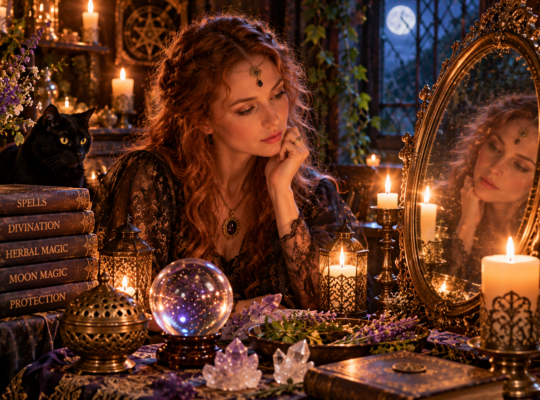
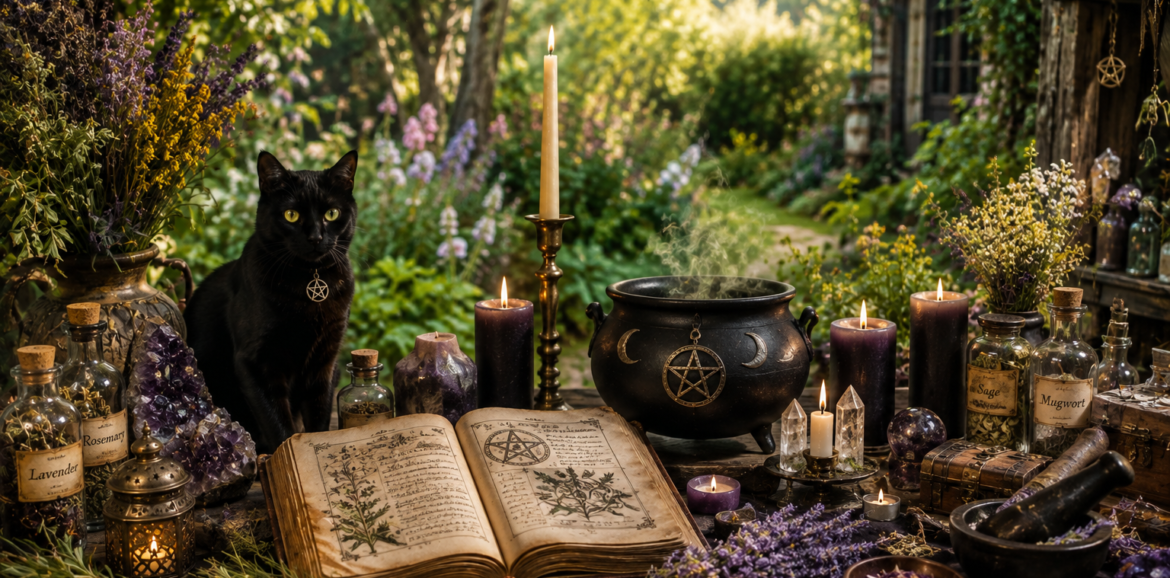
A black cat beside a witch has become one of the most enduring images in popular culture.
But the history behind the idea of a witch’s familiar is much more fascinating than the familiar image of a cat sitting beside a cauldron.
What Is a Familiar?
Historically, the word “familiar” has been used in European folklore and witchcraft traditions to describe a supernatural or magical companion believed to assist a witch or practitioner.
Stories have described familiars appearing in the form of animals.
Cats, dogs, birds and other creatures have all appeared in folklore, although the exact traditions differ considerably between regions and historical periods.
Why Are Cats Associated With Witches?
The association between witches and cats developed over centuries.
Cats were already surrounded by folklore and superstition in different parts of Europe.
Their independence, nocturnal behaviour and ability to move almost silently made them mysterious animals to people living in earlier periods.
Over time, stories about witchcraft and animal companions helped establish the image of the witch with a cat.
The black cat eventually became particularly famous.
Familiars in Witchcraft Folklore
Historical accounts of witchcraft sometimes described supposed familiars as creatures that helped a witch carry out magical activities.
However, many of these accounts came from periods when accusations of witchcraft could have extremely serious consequences.
It is therefore important to distinguish between historical records, folklore, accusations and modern witchcraft practice.
The familiar of popular imagination is not necessarily the same thing as the familiar described by a historical source.
Are Familiars Real Animals?
Modern witches and magical practitioners interpret the idea of a familiar in many different ways.
For some, a familiar may be a beloved animal companion with whom they feel a particularly strong connection.
For others, the familiar is understood symbolically or spiritually.
Some modern practitioners do not use the concept at all.
There is no single rule governing modern witchcraft.
The Witch and Her Animal Companion
The idea of a witch’s animal companion has also developed a much gentler meaning in modern culture.
A person who feels deeply connected to a cat, dog, bird or another animal may describe that relationship as special without necessarily believing the animal possesses supernatural powers.
The bond itself can be meaningful.
Animals have accompanied human beings throughout history, providing companionship, comfort and affection.
Familiars and Modern Witchcraft
Contemporary witchcraft is extremely diverse.
Some practitioners follow organised traditions.
Others are solitary witches who create highly personal practices.
Some are interested in paganism and nature spirituality, while others concentrate on spell work, folklore or historical magical traditions.
Consequently, there is no universally accepted modern definition of what a familiar must be.
The Familiar in Popular Culture
Books, television and films have given the witch’s familiar a life of its own.
The mysterious cat sitting beside a spell book has become a cultural symbol recognised around the world.
Yet the historical reality is considerably more complicated.
Behind the familiar image lies a mixture of folklore, superstition, religious history, witchcraft accusations and modern magical imagination.
A Magical Tradition Full of Mystery
Perhaps the enduring fascination of familiars comes from the idea of a secret companionship between a witch and an animal.
Whether understood as folklore, symbolism, spiritual belief or part of modern witchcraft, the familiar remains one of the most enchanting figures in the history of magical traditions.
And perhaps that is why the image of a witch walking through the night with an animal at her side has survived for centuries.
It captures something wonderfully mysterious about our relationship with the natural world.