The word sacrifice can immediately create frightening images.
Thank you for reading this post, don't forget to subscribe!Yet the historical meaning of sacrifice is considerably broader than the modern idea of violence.
Across human history, people have offered food, flowers, incense, objects, animals and other gifts within religious and spiritual traditions.
The subject therefore deserves to be examined carefully rather than sensationalised.
What Does Sacrifice Mean?
At its simplest, sacrifice means giving something of value as part of a religious or spiritual act.
Historically, offerings could be intended to show gratitude, seek favour, mark an important occasion or establish a relationship with a deity or spiritual power.
The practice is far older than modern witchcraft.
Sacrifice and Witchcraft
Witchcraft has never been one single worldwide religion.
Different cultures have had completely different magical traditions, beliefs and practices.
Consequently, it would be misleading to suggest that sacrifice is a universal feature of witchcraft.
Many modern practitioners have nothing whatsoever to do with sacrifices.
Their practices may instead involve meditation, herbs, candles, prayer, symbolism, divination or personal ritual.
Offerings Are Not Necessarily Sacrifices
There is an important distinction between an offering and a sacrifice.
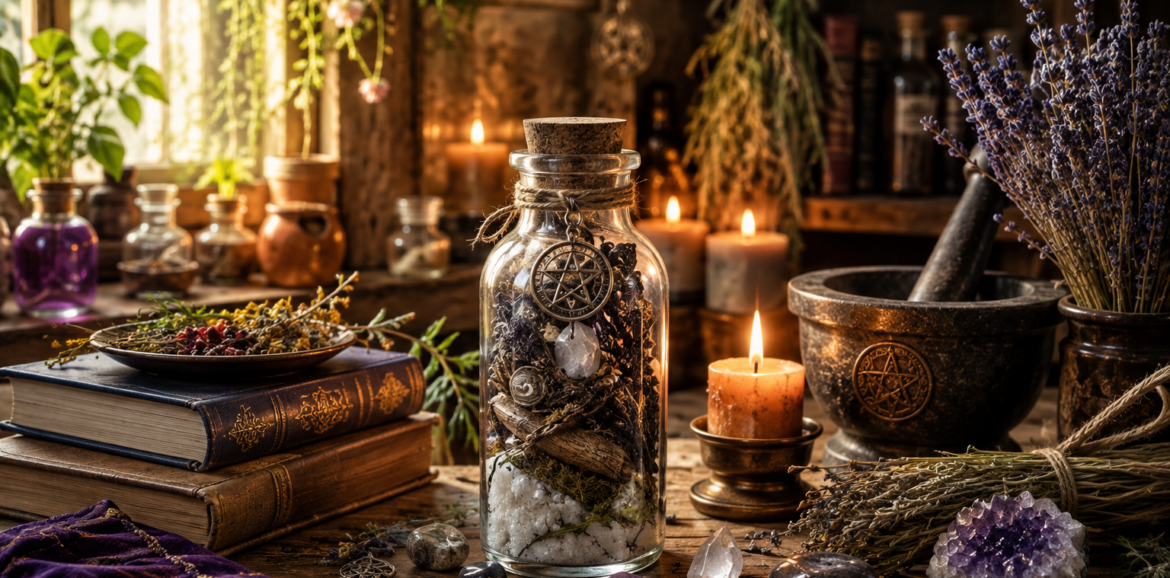
Someone might leave flowers at a sacred place.
Another practitioner might burn incense.
Someone else might place food or drink upon an altar.
These actions can be understood as offerings rather than sacrifices in the violent sense that the modern word sometimes suggests.
Why Were Offerings Made?
Historically, offerings could serve many purposes.
They might express gratitude.
They might accompany a prayer.
They might honour a deity.
They could mark a seasonal festival.
They might form part of a rite of passage.
The meaning depended upon the culture and the particular tradition.
The Darker Side of History
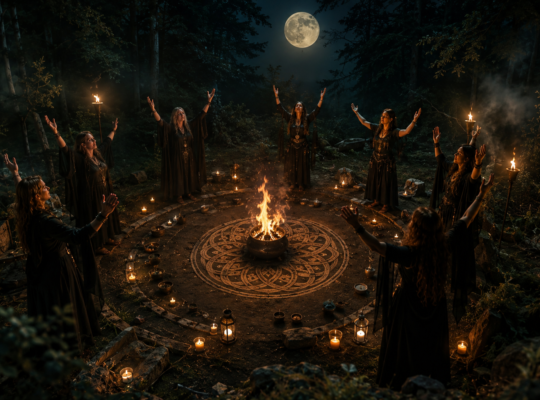
There have certainly been societies throughout history in which animal sacrifice and, in some historical contexts, human sacrifice occurred.
These practices belong to particular cultures and periods and should not automatically be attributed to witchcraft.
The historical record is complicated, and ancient religious practices cannot simply be transferred into modern witchcraft.
Modern Witchcraft
Contemporary witchcraft is extraordinarily diverse.
Some practitioners identify as witches because of spirituality.
Some follow forms of Wicca or other modern pagan traditions.
Others practise folk magic privately.
Some concentrate on spellcraft.
Others are primarily interested in herbalism, folklore, divination or nature spirituality.
There is no single modern witchcraft rulebook.
What About Blood Sacrifice?
Blood sacrifice is a particularly sensationalised subject.
Modern witchcraft does not require human sacrifice, and harming another person is neither necessary nor acceptable as a condition of practising modern witchcraft.
Historical references to blood rituals should therefore be treated as matters for historical study rather than instructions for modern practice.
The Symbolism of Giving
Perhaps the most interesting part of the subject is the symbolism of giving something away.
An offering represents an act of giving.
It can symbolise gratitude, respect, devotion or intention.
Even something extremely simple can carry considerable personal meaning.
A candle, flower or piece of bread may be insignificant in financial terms but meaningful within a ritual context.
Why the Subject Is So Often Misunderstood
Popular culture has frequently portrayed witches as people involved in sinister ceremonies and dangerous sacrifices.
Such imagery can be dramatic.
It is not, however, an accurate description of the enormous variety of witchcraft traditions that have existed throughout history.
Separating historical evidence from folklore and sensationalism is essential.
Exploring Witchcraft Without Sensationalism
Witchcraft contains fascinating subjects ranging from household folklore to elaborate ceremonial traditions.
Magical sacrifices are one of the darker areas of that history, but they are also a subject that demonstrates how complicated the relationship between religion, magic, culture and symbolism can be.
Understanding the past does not require approving of every practice found within it.
Sometimes the most interesting approach is simply to ask:
Why did people believe these rituals were important?
That question can reveal far more about the human history of magic than sensational stories ever could.