Discovering Witchcraft And It’s Seasonal Rhythms
Thank you for reading this post, don't forget to subscribe!The natural world has always provided inspiration for magical traditions.
The changing seasons, the longest and shortest days, the first signs of spring and the arrival of autumn have all carried symbolic meaning for people interested in witchcraft and nature-based spirituality.
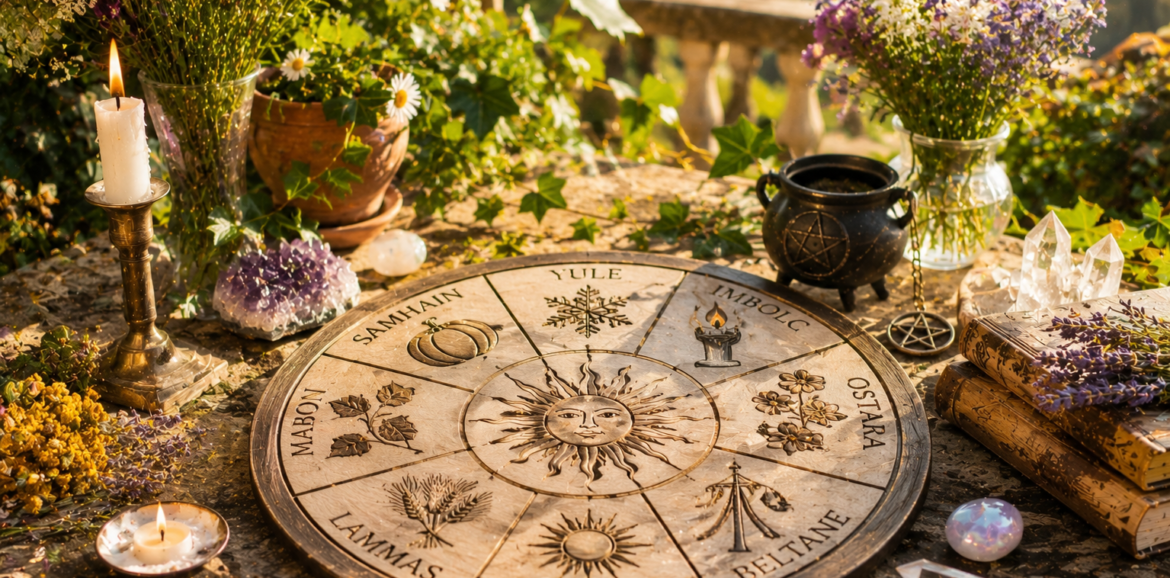
One modern framework for exploring these seasonal changes is known as the Wheel of the Year.
What Is the Wheel of the Year?
The Wheel of the Year is a modern pagan and witchcraft framework that marks important points in the annual cycle.
It commonly includes eight seasonal festivals, known as Sabbats.
These include:
- Samhain
- Yule
- Imbolc
- Ostara
- Beltane
- Litha
- Lammas
- Mabon
Different traditions interpret these celebrations in different ways, and not every witch follows all eight.
Why Are the Seasons Important?
For people practising nature-based witchcraft, the seasons can provide a natural rhythm for reflection and ritual.
Spring may symbolise beginnings and renewal.
Summer can represent energy, growth and abundance.
Autumn may encourage thoughts of harvest, gratitude and transition.
Winter can become a time for stillness, reflection and looking inward.
These meanings are symbolic rather than universal rules.
The Eight Sabbats
The festivals of the Wheel of the Year reflect different points in the seasonal cycle.
Ostara, for example, is associated in modern pagan traditions with spring and renewal, while Beltane is traditionally connected with the arrival of warmer weather and the height of spring.
Mabon is associated with the autumn equinox and themes of harvest and balance.
Samhain is perhaps one of the best-known festivals and is associated in modern witchcraft with the transition from autumn into winter.
Witchcraft and Nature
The Wheel of the Year demonstrates that witchcraft can involve much more than spells.
It can also involve observation of nature, seasonal symbolism, personal reflection and an appreciation of the changing world.
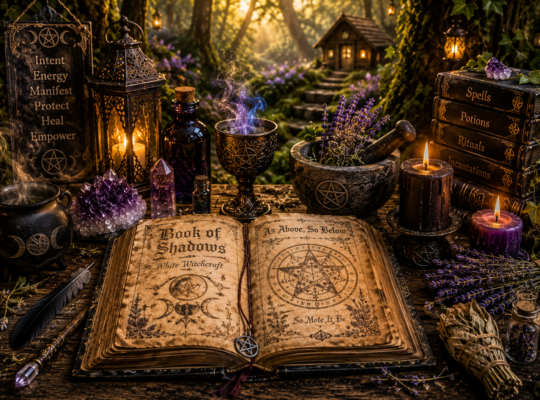
For somebody exploring white witchcraft, the natural environment can provide inspiration without requiring elaborate rituals.
A walk through woodland, the changing colour of leaves, the first flowers of spring or the warmth of the summer sun can all become reminders of the constantly changing cycle of nature.
Creating Your Own Seasonal Connection
There is no requirement for everyone to celebrate the seasons in precisely the same way.
Some people may mark a particular festival with candles or flowers. Others may simply spend time outdoors, reflect on the year or establish a personal intention for the season ahead.
The important thing is understanding the symbolism and making the practice meaningful.
The Ever-Turning Wheel
The Wheel of the Year offers a beautiful way of looking at time.
Nothing remains exactly the same.
The darkness gives way to light. Seeds become flowers. Summer becomes autumn. Leaves fall, and eventually spring returns.
For anyone fascinated by witchcraft, white magic, seasonal rituals and magical traditions, the Wheel of the Year provides an enchanting reminder that nature itself can be a source of symbolism, reflection and inspiration.